Friday, July 15, 2011

Flixist Film School: A Primer to Art Direction

The first question some of you might ask yourselves is, “What IS Art Direction?” Art Direction can be a very vague concept for a person to grasp, especially someone new to the film industry. To put it simply, the Art Director establishes the “look and feel” of a film, from designing sets and costumes to coming up with a style guide (usually a booklet of visual and cinematic rules for the film to follow). I’m going to focus mainly on color and lighting in this feature to serve as an introduction to Art Direction as they’re the most prominently used forms of visual direction in films and often times the simplest tools for telling a story.

The second question you might ask is, “How do I become an Art Director?” Well, you typically can’t just apply for something like that. You kind of have to snake your way through the various departments, slowly working your way up the chain, get in tight with those in charge until someone bestows upon you the magical privileges of Art Directing.

The third question you will invariably ask is, “How can I tell good Art Direction from bad Art Direction?” Good question, Philip. Films with good Art Direction can usually be summed up in a few words. For example, if you were to judge a film’s color palette, you should be able to say something like: “The bad guys are red, the good guys are blue. Also, yellow means danger.” These aren’t absolute truths, but they’re rules that a film makes from the very beginning. It’s different for every film and usually these rules are outlined in the style guide. If a film doesn’t set up these rules, or if it sets up rules and then continually breaks them, then that is bad art direction. The rules set in place from the beginning must be consistently maintained throughout the film. If blue equals good and red equals bad, that has to be the rule the entire way through, or else you’ll end up confusing people on a subconscious level. You can’t have a film’s color guide be “Good guys are blue sometimes and bad guys are red sometimes... and sometimes people are just whatever color, randomly” because then your viewer’s going to have trouble knowing their loyalties, subconsciously, and they might possibly root for the bad guy.

I also think it’s important to mention that having good or bad Art Direction can decide whether your film is a memorable classic or ultimately forgettable. Nobody’s favorite film is likely to be one that is devoid of any kind of inspirational visuals or content. This is why filmmakers tend to do something special to set their film apart from the rest. Children of Men, for example, was a pretty unique concept in itself, but most people remember it for its dazzling continuous shot action sequences where the camera wouldn’t cut for an extended period of time (or at least wouldn’t appear to. There were carefully placed cuts). This is just one of the ways using tricks can help you create a film that is truly unique and memorable.

I’m going to start with a rudimentary example of excellent Art Direction, just so we’re all on the same page here.
beetlejuice
Third time’s the charm...

Tim Burton directed the hilarious and quirky Beetlejuice in 1988. There are numerous lines I can recall on command and it’s a movie I hold in very high regard... but none of that shit matters. What matters is that this film is RIFE with sweet, sweet Art Direction. You can practically lap it up, frame by frame.

What Tim Burton has done here (which he seems to not do anymore and now just saturates the screen with obnoxious colors and curly trees) is clearly define the various realms in the film by picking and choosing certain colors to represent them. The two prominent realms are the otherworldly afterlife (green/blue) and the mundane mortal realm (brown/beige/subdued colors). It’s important to be able to distinguish the worlds in this movie because one represents the crazy afterlife and one represents our boring mortal realm. I would classify this as an almost child-like way of directing the art in the film, since it’s very iconic and simplistic, which isn’t a bad thing.
beetlejuice-2
Another helpful tool Burton sparingly uses for his otherworldly scenes is Aerial Diffusion, in which subjects pop out from the misty, blurred background. These scenes are lit up green against a blue background (or reversed for the opposite effect, making subjects in the background pop out) which pop right out at you in a more pleasing way than the shitty 3D we have nowadays. The colors take on an almost neon appearance, so much so that you automatically perk up to pay specific attention to what’s going on. You start to get that feeling of wonder as it creeps across your mind as you watch the events unfold. So few films are able to punctuate their scenes so effectively with this technique and why Beetlejuice is a cut above the rest, visually speaking.

That would be fine if it were just lighting and color. I mean, what else do you spoiled brats need? Well, there’s also Shape and Proportion. Burton makes things as angular and not-straight as possible in the afterlife realm to give it that dreamlike quality. He did the best with the budget he had back then, and though the film has obviously aged in terms of special effects, it still holds up due to its desired effect.
beetlejuice-3
To creep you the fuck out.
Besides, something tells me that facilitating Tim Burton with an over-inflated special effects budget is just asking for trouble.
alice-in-wonderland
HNNNGGG... TOO MUCH ART DIRECTION...
Since I want to bring up one other film in this article and not just yammer on incessantly about Beetlejuice, I’ll just throw out one last interesting detail: The one thing about Beetlejuice, the one element that follows none of the Art Direction rules set before it in the entire film... is Beetlejuice himself. He’s got a mess of wild yellow hair with a black and white, vertical striped suit to keep you uneasy about his entire character. He’s the most recognizable thing in the entire film, and it makes sense, if you think about it, because he’s the one rogue element to the entire story. He throws a wrench in everybody’s plans, so he has to be the one enemy to both the dead and the living. This is why Art Direction is important.
beetlejuice-4
Alright, maybe that dreadful wedding dress qualifies as a second enemy.
Now, I’d like to talk about another classic film that uses its Art Direction to great effect:
shawshank-01
The Shawshank Redemption, directed by Frank Darabont, is an amazing movie. It won 12 awards, it has Morgan Freeman saying “Zihuatanejo,” it features prison rape/beatings, Rita Heyworth, yada yada... This movie is the most uplifting piece of—whoa, wha, what? Huh? Prison rape?! What the hell, man, this movie’s supposed to be one of those uplifting tear-jerkers where you cry because it’s so beautiful. That can’t happen while rape is afoot.

That’s the perplexing thing: How could a prison movie be so infinitely rewatchable? Drugs? Magic? Science!? Voodoo?!? I’ll give you a hint: It’s not because of the Andy rape scenes. No, it’s all due to Art Direction.

Perhaps the most overwhelming hurdle this movie has to face is that the primary colors in it are gray; gray uniforms, gray buildings, gray people. The color gray makes a person depressed and hopeless, which usually doesn’t result in happiness. It results in liquor and razors and ropes... However, if you’ll notice, there are multiple scenes in the film that make you feel cheerful. It’s not all prison rape or people shanking each other in the groin. These cheerful scenes usually come after the hopeless scenes. It’s almost like you have to suffer through some bitterness to get to the sweetness, and when it’s time for the sweetness to come out, guess what’s on screen most of the time?
shawshank-02
The sky. That blue, blue sky.

That combined with a reminiscent rustic quality to the set design and a touch of yellow to soften up that gray gives us that feeling of ‘freedom’ that Andy speaks of later in the film. It almost seems like an old memory. Even when they’re not outright showing the sky, these scenes take place in the sunny daytime, so it invokes an upbeat vibe. Without the sky acting as a tonal facelift, I guarantee no one would want to watch this movie. It would be useful for wrist-slitting good times... but that’s the point: It’s not supposed to be depressing. It’s supposed to be happy DESPITE the setting. What the film sets out to do is alleviate grief, which, in a prison movie, is no easy feat. Thankfully, Art Direction exists to express what a script can’t.
lights
A technique that the film employs as part of communicating the tone of a scene is through using key lights, rim lights (backlight, hairline lights, etc.) and fill lights (reflector lights). A key light shines a light on one side of the subject as its primary light. A rim light is used to highlight the back of the subject, creating a hard edge. The fill light is used to give more depth to the subject and generally fill the darker areas with a soft light. The film uses the combination of these lights to make the tension rise as it casts a shadow of judgment on the subject (no pun intended, I’m just brilliant like that). It’s a very simple way to control the tone of a scene and one that The Shawshank Redemption uses to brilliant effect, such as in this scene with Beelzebub... er, uh, Warden Hadley.
shawshank-04
Man that guy’s creepy...
shawshank-05
AAAAHHHH!!!!
As I said, the entire movie is predominantly gray. I’d say it’s about 80% gray while the other 20% is blue, which is used to alleviate pent-up stress caused by all the gray and is usually welcomed with open arms.
shawshank-07
Yeah, like that. It’s no accident that the lightning accents everything with a blue light in this scene. Even though it takes place at night (as it needs to be), the sky STILL emits that blue ‘freedom’ we so desperately need at this point in the film. The same goes for the last few minutes of the film as Red makes his way to Zihuatanejo when he mentions how he hopes “the Pacific Ocean is as blue as it has been in my dreams... I hope... I hope...” It is the color that fuels all hopes and desires in the film, and without it, it would be “that much more drab and empty.” Alright, I’ll stop with the quotes...

“Andy crawled to freedom through 500 hundred yards of shit-smelling foulness I can’t even imagine... or maybe I just don’t want to.”

OKAY, OKAY.

Other movies with superb Art Direction:
fifth-element
The Fifth Element – The most inspired and engrossing utopian future society I have ever seen brought to life in a film. The colors are saturated, bright and vivid. It doesn’t really follow a lot of color rules to its scenery or characters, but what it lacks in consistency it makes up for with charm and intoxicating visuals.
matrix
The Matrix – Like Beetlejuice, The Matrix uses color to differentiate its worlds. Blue is used for the real world, while green is used for the Matrix. The Matrix is clean, bright and immaculate while the real world is gritty, grimy and dark. This goes for everything from clothes to set designs. A more perfect archetype for modern Art Direction was never made.
roger-rabbit
Who Framed Roger Rabbit – Not only are there two separate realms in this movie with toons on one side of the spectrum of absolute un-serious-laugh-nonstop and humans on the side of ultra-serious-no-niceness, but the color palettes for each couldn’t be more stark in contrast. Lighting is also used to great effect as stealthy, tense scenes are lit like a classic Noir film. The “normal world” scenes are colored in a sepia tone to give you that “emotional downtime.” All cartoons in this film, with the exception of Judge Doom at the end, only serve to alleviate tension in the film. Their saturated colors and non-threatening, kid-friendly exteriors help keep the tension low so you can, ya know, laugh.
bill-and-ted
You’re gonna laugh, but... Bill & Ted’s Bogus Journey – The creators of this movie get absolutely no credit for what they’ve accomplished here. Not only do Hell, the real world and Heaven all have their own unique style and color palette, but they managed to direct each of those realms accordingly. If they’re ghosts in the real world, it’s a comedic parody of Poltergeist. If they’re in Hell, it’s a nightmarish romp through every bad memory you had as a child (Triple points for each “eternity” having its own color palette). If they’re in Heaven, well, it’s really white and glossy... I can’t really commend the movie too much, though, because the fun predictably slows down around the time they enter Heaven. It picks up again later, but I almost feel like the climax was in Hell, which had to be within the first 30 minutes or so. However, the characters are unforgettable. The “evil robot uses” have to be the most hilarious riff on Bill & Ted ever as R-rated, asshole versions of normal Bill & Ted... and I know I’m going off on a tangent here, but this movie is WAY under-appreciated, and did you know they’re making a third one, okay I’m just going to end this here.

So as all of you can now see (except Dave over there with your thumb up your butt), movies would be nothing without Art Direction. The more you think about your favorite movies, the more you’ll probably recollect how their design choices filtered into your mind convincing you to like them. Art Direction is like seduction. It doesn’t communicate ideas on an intellectual level. It bypasses the conscious and permeates the subconscious, signaling certain parts of your brain, which in turn affects your overall opinion of the movie. This is just the beginning, though! Go out and learn all the many subtleties of Art Direction for yourselves!

Some books I recommend:
  • Cinematic Storytelling by Jennifer Van Sijll – A wonderful book on camera and lighting techniques from 100 classic films that every filmmaker must know.
  • Directing the Story by Francis Glebas – Storytelling and storyboarding techniques for Live Action and Animation.
  • Dream Worlds by Hans Bacher – Production Design for Animation
  • The Visual Story by Bruce Block – Creating the Visual Structure of Film, TV and Digital Media

Sunday, June 26, 2011

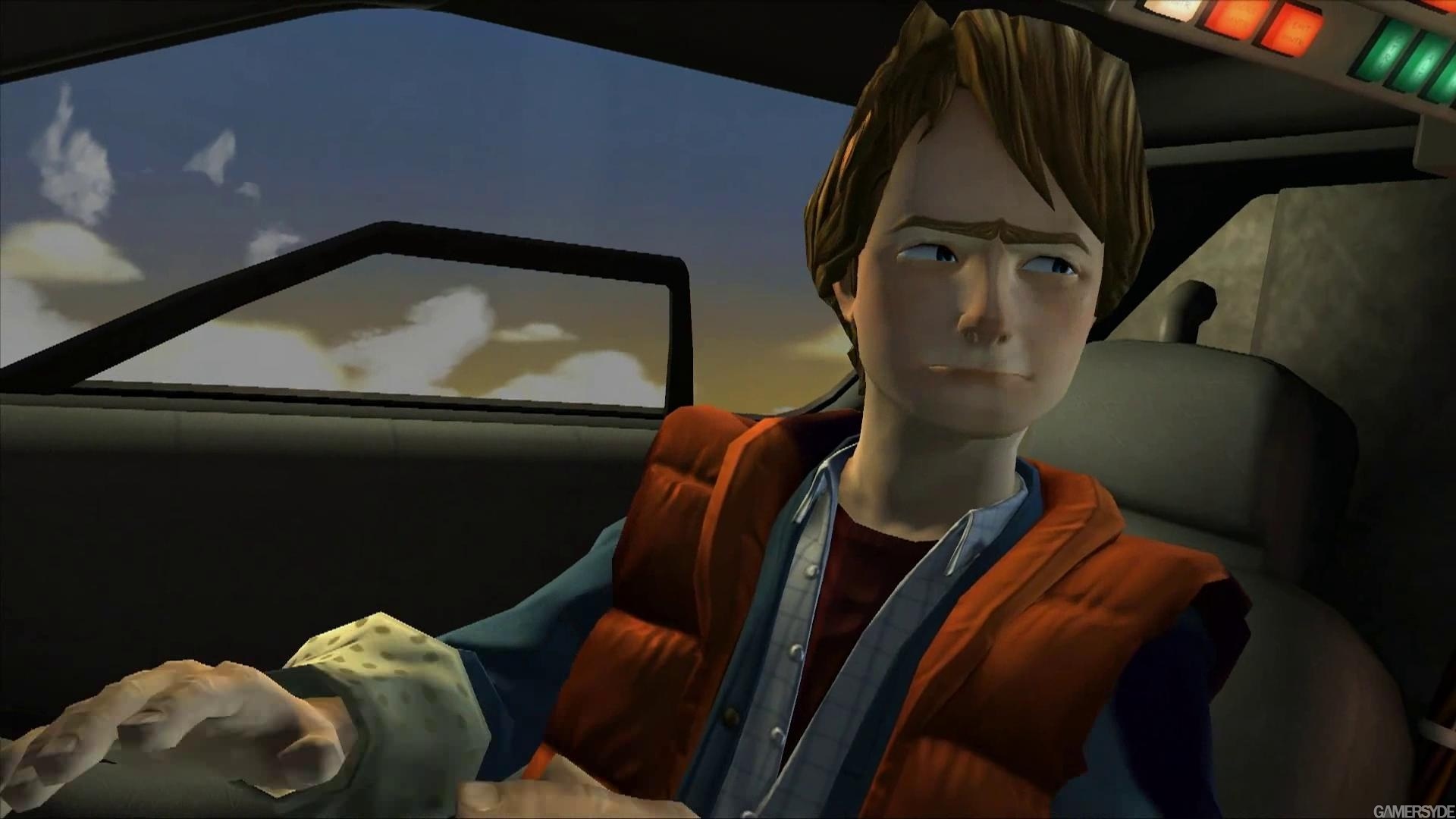
Review: Back to the Future: The Game (Parts 4-5) [SPOILERS!]


This is Part II of my review of Back to the Future: The Game. Now that I've finished experiencing the entirety of the Back to the Future game cinematics, I can give a more accurate review and account of the story as a whole. Please refer back to my first review for details on parts 1-3.

But before I review the game, let me share my impressions that I had after completing the game.

My First Impressions:

Ugh... Just ugh... That's all I can say. It's been approximately 5 minutes since I watched the conclusion to this game, and I'm absolutely awe-struck... I don't know what they were thinking when they concocted this story, but some of it is downright cartoony. There is absolutely no way that I buy any of this being in the official canon of the movies. No way at all.

My Second Impressions:

It's been about 30 minutes... There is no way to review this game... It's a clusterfuck of a story; like a balled-up spider web that I have to untangle with pliers... What a fucking mess...

My Third Impressions:

Okay... Get a grip on yourself... We can... I mean, I can do this...

My Review:

Alright... For posterity's sake, and for the sake of understanding my review, and thus my complaints with the game itself beyond the points that I mentioned in my first review, I am going to post the entire story.

Yes, MASSIVE PLOT SPOILERS beyond this point. I am doing this in order to fully dissect the plot in its entirety.

As quoted from Wikipedia:

"On May 14, 1986, Marty McFly is trying to adjust to a life without his best friend, scientist Doctor Emmett "Doc" Brown, whose belongings are being sold off by the bank following his disappearance six months ago."

My first problem has nothing to do with this establishing intro, but the dream that Marty has just before all of this is established. The game starts us off by replicating a scene from the 1st movie; the scene where Marty is taping Doc in the Twin Pines mall. Everything goes pretty much according to the original history of the 1st movie until he sends the Delorean forward through time. The Delorean doesn't come back and Doc says "I've made a grave mistake." Then he fades away... Marty panics and then wakes up in his bed in 1986 and asks himself where Doc is.

Now, I think it's important to mention that this is NOT an alternate reality, though the game would have you figure that out for yourself, only much later on than need be. It wasn't clear to me until I had finished watching two episodes when I got certain clues that this was in fact a sequel to the 3rd movie and not an alternate reality. That one small scene is a central point of confusion and why it was completely and horribly written. It shouldn't have even been in the game to begin with.

"Marty is surprised when the time-traveling Delorean suddenly shows up without a driver, a recorded message from Doc explaining that he had built a safety device which automatically returned the car to the present, presuming he might get into trouble in the past and trusting Marty to save him."


Marty: "I am surprised."

First off, I'm just going to say right now that it is NEVER explained how or where Doc got this Delorean. It isn't established that he borrowed it from himself at some point in time, nor is it alluded to at any time. It is a complete mystery... or as I like to call it, a plot hole.

By the way, this is a horrible way to start a movie, let alone a game. It should never start on a down note. Here's how they SHOULD have started it:

Marty is living his dream and trying to make the best of his future by landing gigs and going to the Battle of the Bands, even. This way we know that Marty's arc from the end of the 3rd movie holds up and it has forever changed him. Jennifer and him are well on their way to being together forever and then he can talk about him missing Doc (This also establishes Jennifer in the game before he meets her alternate self when he changes the past). From there, we can continue with him hearing about the bank selling off all his stuff and then the Delorean coming to him at Doc's house.

On with the review...

"Using clues in the car, Marty visits the elderly Edna Strickland, a former reporter, and finds that Doc, posing as "Carl Sagan", has been stranded in 1931, charged with the arson of a speakeasy under the mob boss Kid Tannen's control, and was killed by Tannen's gang the next day. He returns to 1931, and with the help of Doc's younger self Emmett and Marty's grandfather Artie, he is able to rescue Doc safely. As they are about to return to the future, Marty finds himself disappearing, a result of Artie being killed by Tannen's gang, and the two return to town to correct the timeline, further engaging the help of Trixie Trotter, Tannen's moll, and Officer Parker, Jennifer's grandfather. Their involvement causes Emmett and Edna to meet, and the two fall in love, unbeknownst to Doc or Marty."

I have no idea why this story features an arson fire or such an annoyingly flat character as Edna Strickland whose only goal in life seems to be torturing people with her personality... Forgiving that one instance, this arson fire plot line seems out of place in the Back to the Future canon. In all of the Back to the Future movies, the main themes are greed, love, jealousy and fear. It is important to have a theme in your story for the audience to relate to. Without a relatable story, you have a boring story.


Trust me. She ain't as cute as she seems.

For example, the plot line from BTTF1 was one produced from George McFly's fear of Biff Tannen. He had to get over this fear in order to obtain the love of Lorraine, his future wife and mother to Marty. Everyone had a stake in this plot line and something to lose.

The almanac plot line of BTTF2 was one produced from greed. Marty had one simple greedy wish to "make a couple of bucks on the side" in getting that almanac from the future. From this spawned an unintended screw-up in the timeline by Biff taking advantage of the time machine. It is from this that we learn that greed just doesn't pay and that if we abuse the power of time travel, we will be punished severely. This is a powerful message.

Finally, the plot line from BTTF3 involving trying to save Doc from being shot, yet discovering that Marty might also be shot for acting like such a tough guy is one motivated by pride and, ostensibly, fear. Doc's own theme is motivated by love as he falls for Clara. His story is touching and relatable while we feel for Marty in perhaps just as painful a way.

The arson fire plot line of this game is so abstract and so pointless that nobody can relate to it outside of bar owners or 1930's enthusiasts. Doc is in jail here, but there is no asshole cop that put him there who needs to be put in his place. There is no mob goon that is responsible for his imprisonment and who ultimately committed the fire. It's one, long, blameless story where the twist is always more important than if it's a good story or not. Sure the story packs some big twists, but at what cost?

If the storyline was simple and to the point as well as had a cohesive theme, it might have been more engrossing. Take any of these fine stories, for example: "Get back the almanac!" or "Get your parents to fall in love!" or "Get back to the future!"

Perhaps the biggest problem is that these games add so many complications to the canon of Back to the Future, since everything usually takes place sandwiched between the timelines of 1955 Hill Valley and 1885 Hill Valley. You would think they would try their best to tip-toe around certain plot details from the first three movies, yet they seem so overly cocky that they're NOT ruining things that they manage to trample all over them in the process.


Echhhposition.

"Doc and Marty attempt to return to 1986, but when they arrive, Doc disappears and the car crashes outside the walled city of Hill Valley, run as a totalitarian society by Citizen Brown, a parallel version of Doc. As Marty investigates, he meets his parents and Jennifer and finding they live in fear of Citizen Brown.

These are also the most boring parts of this time period, where you are forced to sit through dozens of exposition in introducing this alternate timeline to you... It in no way compares to the alternate 1985 from BTTF2 where Marty just had to walk around to get an idea for what things were like in that town. Here, every single mind-numbing bit of information is drilled into your head because you need to know every single damn thing that goes on in this town... except that you don't and most of it is a waste of time.

Beyond this, there is a deeply disappointing scene that I covered in my last review, but I have to bring it up again just to drill in how disappointing this game can get... In this alternate version of 1986, Marty is a complete nerd, supposedly, and Jennifer is a punker. Marty has to prove his worth with the guitar against some jerk who's supposedly the best guitar player in town. This is when they could have played Power of Love by Huey Lewis, but instead they opted for guitar shorthand where it feels more like inaudible riffs than actual music. I loved Marty's "heavy" version of Power of Love in the first movie and this would have been the perfect opportunity to revive it, but instead they favored some lame gag where the jerk falls in a dumpster while showing off his "moves." What a waste.


Ya could'a been Guitar Hero... but yer just a midi.

"Marty soon learns about Edna's influence on Emmett's life, and she used him to enforce her moral standards to create a perfect, crime-free society. Marty is able to convince Citizen Brown of his true calling in science, much to Edna's dismay."

Here is where things get dicey. This is perhaps the most interesting that the game ever gets in terms of plot. Once Marty confronts Citizen Brown, we are treated to an intense conversation that conjures up questions of why time travel was ever thought up in the first place if a dystopian society was what resulted from it. Further more, Citizen Brown's desk is inside the courthouse right behind the innards of the clock. It makes for a very intense scene. This whole time, Citizen Brown is convinced Marty is a psychopath in trying to convince him he's a time traveler. Once he convinces him of it in showing a picture of himself with Marty in 1931, Citizen Brown goes with Marty back to 1931.

What's also perhaps an unintentional bonus is that Citizen Brown looks like Christopher Lloyd's character Doom from Who Framed Roger Rabbit, borrowing that tyrannical sense of strictness for his character here.


Did I lie?

"Brown helps Marty fix the Delorean, and the two return to 1931, a few months after their initial encounters there.They find that Edna is trying to guide Emmett's scientific genius towards law-abiding, social conditioning technology. Though Marty insists they help Emmett to get back on his own work, Brown becomes concerned that Marty couldn't care less for Edna's or Brown's own future, and he drives off. Marty successfully breaks Emmett's and Edna's relationship, and Emmett comes to realize science is his true calling."

This part of the game is also boring, for the most part. Marty has to find a way to get Edna to fall back out of love with Emmett, and the only way to do that is to make him seem like he has a criminal mind or is capable of the same horrible things as Kid Tannen. This involves a lot of tedious puzzle-solving and the pace of the game is reaching record slows here.


Just jump, Emmett. You'll save yourself a whole lot of backtracking later on.

All the while, Citizen Brown is trying to calibrate the Delorean. He keeps testing it by going forward in time in a few minutes and ends up going back in time about ten hours. As he calibrates it more, the time intervals begin to improve, but he doesn't get to finish calibrating it before leaving with Edna.

The confrontation with Citizen Brown and Marty is a key note in this episode and one to pay attention to. There is a divergence of motivation at this point where Marty seems insistent that they break up Emmett and Edna, but Citizen Brown feels that science is the real issue here. It's science that's the problem. At this time, the story is starting to pick up as the drama picks up. This is also when the plot is starting to be motivated by love, which is when the story starts to actually seem relatable and interesting. Surprise, surprise.

Just to make things clear to those who will probably never play this game, never in this game do you feel like any of it is up to snuff with the original movies, so when I say positive things, it's always taking into account that it's like a crippled dog trying to run and miraculously waddling instead. From the animation to the story to the sound design... You always feel like you're lowering your standards "because it's a game." I don't see why this always has to be the case as dozens of games have a flair for cinematics these days. It really doesn't have to be this complicated.

"At the science expo, Brown and Edna have worked together to delay Emmett from displaying his flying car, but Marty rescues Emmett in time, and exposes Edna as the speakeasy arsonist. Though Emmett is briefly distracted by the arrival of his father, Marty is able to help the two make amends, and the demonstration is a success. Marty finds that Edna has stolen the DeLorean and disappeared somewhere in time. Citizen Brown gets hit by the fleeing DeLorean, and fades away, his timeline erased. But soon Doc, as Marty knew him, arrives."

See, I can't tell what the writers were thinking... I mean, some of the things that young Emmett invents are impossible even by today's standards, let alone for 1931. I am often without words when I see such anachronistic inventions. Am I meant to believe that this kind of technology existed in that time period? Am I meant to induct this into the Back to the Future canon? or is this whole game just a cartoony riff on the events from the three movies? If so, why follow from where the 3rd movie left off at all? Why not just have Doc and Marty inexplicably back together again going on adventures together?

And getting back to accepting this invention that young Emmett apparently invented, I mean, if it WAS canon, then that would mean the Doc had access to a flying car throughout most of his life and therefore could have put flying circuits in the Delorean from the very beginning... but he doesn't and for very good fucking reason: THERE WERE NO FLYING CARS IN 1931. If I may take something that IS actually canon, Doc said in the first movie when he saw the Delorean for the first time, "I actually invent something that works!" This means that all of his inventions up until then were FAILURES! This game would have us believe everything worked perfectly for him his whole life, up until and including the Delorean itself... and apparently he's the father of the hover conversion system and nobody told Back to the Future Part 2.


Really...? I mean, really?!?

It's inconsistencies like this that drive me up a fucking wall with this game... I'm tired of them trampling all over logic and common sense in the pursuit of... whatever it was they were pursuing with this game.

REVIEW TIME... AGAIN

"As they greet each other, Hill Valley fades away around them, and they worry Edna has changed the past. After meeting Marty's great grandfather, they find Edna, elderly and living alone, and learn that she had traveled back to 1875 and had set Beauregard Tannen's saloon on fire, accidentally destroying the rest of the town in the process.

Let me try to understand this... Edna goes back to 1875, destroys the entire town, causing untold disaster to the Hill Valley timeline, and we're meant to believe that this does not cause a paradox to happen? Logically, by Edna screwing up the timeline in such a manner, she would have caused a paradox. The events of the 3rd movie had no way of happening if the town of Hill Valley was destroyed 10 years earlier. If those events never happened, that would have caused a paradox. It would be the same as if Marty, in the first movie, shot himself before he had a chance to go back to the future in 1955. It completely null and voids anything that happened after those events took place, so, in effect, Doc and Marty would have faded away due to irreparable damage being caused to the timeline.

This is what I mean about them being cocky about their story. It's as if they don't care or think of the ramifications of certain actions or they just completely ignore the rules of time travel set within this story and they just make up their own rules when they see fit. It's inconsistent and it makes no effing sense.

Of course, the original movie canon is at fault here too, though by a hair. In Back to the Future Part II, Marty and Doc return to 1985 after arriving back from the future, but it's changed, due to Old Biff screwing up events in the past. Logically, Doc and Marty should have faded away at this point upon arriving back into their own timeline. It happened to Old Biff in the future once he got back from changing events in 1955, so why not Marty and Doc? Because it's an inconsistency. The reason I am able to overlook this detail? Because that was actually a good and entertaining movie, while this is a predominantly boring piece of pseudo-cinema.

They are able to catch up to Edna in the past, prevent her from burning town the tavern, and return her and the DeLorean back to 1931, where she is arrested and put in jail with Kid Tannen. The second DeLorean fades away, having become unstable. Marty is initially shocked when he learns that Artie is marrying Trixie, but is relieved to know that was only her stage name, and his family line is still intact."

Who didn't see this coming? Yeah, that's actually your grandmother, Marty... I mean, it worked for Futurama, why not this? I don't understand why that even had to be a mystery to begin with. It's like everything else in this game. Bob Gale sucking on a lollipop: "Jus cuz."

Backing up a bit, that whole bit about trying to get to the bottom of where Hill Valley went was actually interesting, though I was a bit disappointed by Michael J. Fox's cameo appearance as Marty's great grandfather. I think it was the accent. I would have preferred if he just spoke in his normal accent. It distracted more than anything... though he did do a good job of protecting our heroes from the bitch that is Edna Strickland holding a rifle to their heads.


You keep on truckin', J. Fox.

Once they go back to 1875 to retrieve Edna, there are some puzzle elements that must be endured. Once that's done with, they now have Edna on the run.

This is when the real fun starts.

Doc and Marty are hovering above Edna as she's driving the other Delorean. They need to attach some satellite dishes to Edna's Delorean in order to control her flux capacitor and send her back in time with them... but Marty has to get out and literally attach them himself. How will he do this, you may ask...


WITH THE HOVERBOARD FROM 2015. THAT'S HOW.

Oh... Oh yes... I literally cheered in my seat at this moment. This is perhaps the coolest moment in this entire episode and, perhaps, the entire game. Marty gets out of the car and attaches the satellites (three in total) to Edna's car and has to aim them at Doc's satellite. Meanwhile, Edna is trying to cause vehicular manslaughter as she swerves the car whenever she catches a glimpse of your face. It's obviously not as harrowing or entertaining as the scene from BTTF2 when Marty tries to get the almanac from Biff's car on the road, but it definitely pays homage to it. After Marty gets the signals of the car to line up with Doc's, they floor it to the future where Edna crashes into the jail, conveniently. The cop from before arrests her and locks her up with Kid Tannen, assuredly to get raped... I was confused when I heard Doc's explanation for the Delorean disappearing as it becoming unstable. I think it was just a convenient way to cover up their mistakes of having two Deloreans in the same time period (Though, to get technical, there were three, since one is presumably still safe in the cave from the third movie... Though, who the hell knows if that's true anymore in this canon.)

"Doc and Marty return to 1986, where Marty finds nearly everything is the same as when he left. In this timeline, however, Doc had never disappeared, instead staying part-time in his father's home along with Clara and his children. Furthermore, Edna and Kid Tannen have become married since their time in jail, and her own personality has turned around for the better. Doc presents Marty with a book, the history of the McFly family, as a graduation present, which was the original reason he traveled back to 1931. They are both surprised when three separate DeLoreans appear, and future versions of Marty demand that Doc and Marty come with them to correct the future. As they argue which is the correct future, Doc and Marty take off into time in their DeLorean, preparing to investigate this new curiosity."

Wh... B... I don't... See... I... Whyyyyyyyyyy...?

This just doesn't make any damn sense. No damn sense at all... I give up.

Summary:

STORY... 6/10

The story is a mish-mash of horrible and interesting, but execution goes a long way. The execution here was poor most of the time because they decided to put in so much fluff in order to fit the events to the scope of a game. If they had told the story they wanted to tell in a more cohesive and cinematic way (and not JUST the action sequences), it would have been more interesting and entertaining, overall.

GAMEPLAY... 4/10

The game itself is disappointing because you're never actually controlling Marty doing anything cool, like driving the Delorean or riding on the hoverboard. It's just point and click nonsense, which isn't fun. It's never been fun. When you play a game, you expect that the action bits be in your control, but they never are in this game. It's massively disappointing... The puzzles that are here are creative, but they usually have no place in a Back to the Future game. It's like shoving a polar bear into a fishbowl. It just don't look right.

GRAPHICS... 6/10

Credit must be due to the art direction that this game received, but the animation department was lazy and made rookie mistakes most of the time. Character interactions look stiff and unrealistic. The only time character animations are believable are when they're running or walking. The facial expressions aren't very fluid and you can sense how the characters are being manipulated by strings pulling them along. It's like a puppet show.

MUSIC... 8.5/10

Since they stole most of the music from the first three movies, it's easy to rate this higher than the rest. They made up riffs based on the Back to the Future theme here and there to accompany the story, but a lot of times, the music is ill-fitted to the scene and isn't as appropriate as it could be.

SOUND... 6/10

The only reason I'm giving any credit here is because of the voice acting. Once Christopher Llyod gets going and cracks out of his craggy old voice, it's enjoyable for the most part. The guy who plays Marty also gets better with time as he gets into the groove of things. There are a few voices that are horrible, like Biff's, but for the most part they get everything right... The actual sound effects are pretty horrible, however, because a lot of times they don't sync up properly or even happen at all when they're supposed to. The sound department was really lazy when they worked on this game.

CLOSING STATEMENT

What's funny, or tragic, maybe, is that I love Back to the Future so much that I'm willing to suffer through any further sequels that they put out after this... Most of it is bad, but it's not completely devoid of entertainment value, and IT IS the best Back to the Future game ever created (which isn't really saying a whole lot). That being said, I enjoyed parts of the game, but dreaded most of it for the simple reason that it deserved better treatment than what we got.

FINAL REVIEW SCORE... 6/10 (Not an average)


Yeah... I know how ya feel, Marty.

Saturday, June 18, 2011

My Idea for Jurassic Park IV

Alright, so riffing off of the recent news of Jurassic Park IV script being rewritten, I decided to take a crack at a Jurassic Park IV story because, frankly, I'm curious to see what I could come up with...

The first script handed in for the movie involved genetically engineered dinosaurs. I think Jurassic Park fans are pretty much all in agreement in thinking that genetically engineered dinosaurs seems like a pretty silly idea on paper... but I think there are certain negative connotations people have of that idea. “Genetically engineered” is such a broad term that I think people are automatically jumping to the worst possible conclusions; that it will be an almost fantastical Spiderman-like jump in plot logic and that these “genetically engineered” dinosaurs are going to be used in some kind of military initiative... It also gives people the idea that what would be enhanced about dinosaurs would be their intelligence; dinosaurs hatching plans and fighting a war with the humans and such. However, I don’t think this is necessarily the case.

Yeah... None of this.

My idea for the movie would start out with the military experimenting with the possibility of using dinosaurs to different ends, but mostly utilizing them as weapons... Yes, it’s the same vague idea as was rumored, but hear me out. Obviously it would be absolutely ridiculous to have Einstein-level dinosaurs running about scheming against the humans that created them. I don't think we're gonna have raptors running for senate anytime soon... Instead, in taking a cue from Malcolm from the first movie, “life will find a way.” You can’t stop life as much as you can stop nature, which is exactly what happens when these dinosaurs start developing gills and wings for flight.

Like this... only cooler... and less Sean Connery-y

But I’m getting ahead of myself... So, the military steps in to take control of the island, doing whatever they like with it. Now that Hammond is dead (or perhaps just loses control of the island in some fashion), the dinosaurs are now in the government’s control. From here, the government sends some research teams to try out some experiments on dinosaurs in trying to make them more adaptive and capable of being controlled, mentally.

On the island, the scientists are desperately trying to find the genome in a dinosaur that they can target to evolve and change at their discretion. Once they find it, they activate the genome which then sets in motion some evolutionary toll in the dinosaur. They dunk the dinosaur in water and it sprouts gills. It’s a resounding success. They start to replicate this experiment with all the dinosaurs and the first part of their duties is fulfilled.

But when the dinosaurs start to evolve, they are then capable of getting off the island. T-Rex’s start to form gills, raptors form wings, dilophosaurus’ start to resemble monkeys with opposable thumbs. They become even more powerful than they were previously and even grow in size. The team tasked with controlling and experimenting with these dinosaurs is now powerless and experts are sent in to deal with the problem. People who have dealt with this kind of thing before...

Enter Dr. Grant and Dr. Sattler, etc. to save the day. The General who sent the order doesn’t see the point in bringing these so-called “experts” into the mix, but follows his orders given by the President. Dr. Grant and Dr. Sattler suddenly being thrust back together to solve a problem is a bit awkward at first, but they start to get back into the swing of things before too long. They start to realize that the dinosaurs that reach the nearest island don't stay there--They use up whatever resources they can and then leave to go to the next island... They theorize that some force of nature is causing them to “island-hop” in an initiative to reach the mainland where there is the possibility for permanent subsistence. Something must be done.

Dr. Grant introduces an idea that if you give an animal in nature options, it will always take the route with lesser difficulty and higher rate of survival. Therefore, they start to lure them back to the island with dead cows and goats (reference!) as well as using sonar to push their attention in the opposite direction. The dinosaurs will turn back, right?

But they fail... big time. Even by following these suggestions, the dinosaurs remain persistent. Without causing a major upset in the ecosystem, they can’t seem to stop the dinosaurs from moving. The dinosaurs keep adapting to whatever they throw at them, so they just become more and more dangerous... They must come up with another plan and fast before the military decide to nuke them once and for all. That General's a real dick and will most likely get eaten by the end of the movie, because that's what happens to guys we don't like in Jurassic Park movies... but now they're out of ideas.


Enter the ever-reluctant Ian Malcolm.

Malcolm tries to help out, albeit with a bit of resistance. He realizes that targeting the genome was the military’s biggest mistake and what they need to do is reverse the process. That’s when they realize that they have to go back to the island where it all started in order to obtain the research that the scientists were working on (before they were, ya know, all eaten). This way they can form a reversing agent.

The General says that they must be the ones to go since they've been there before and because they know what to look for. All of them feel majorly boned, but reluctantly agree to go. They also bring along a few experts, but can't seem to find anyone who wants to risk their lives... except for Tim and Lex, both adults now and "evolved" into their natural career choices. Lex is an experienced computer programmer who can help them hack into the encrypted computers to retrieve the information they need and Tim... well, he’s probably been dreaming of going on another adventure for years with Dr. Grant. He's a budding archeologist... Malcolm is hesitant at first, but then just says “Fuck it. I’ll go.” Because, seriously, he’s getting used to this shit...

It would be great if Roland, the great hunter from the Lost World could return to offer up some of his expertise, but the actor died, so I doubt that would happen... Maybe the character has a son? Or it could just be someone on the island who has been dealing with these evolved creatures for years and knows how to handle them.


So yeah... That’s my idea. I don’t think it’s completely horrible, though it does need work, of course. I think it has a certain amount of sci-fi to it, but I don't think it's a huge jump in logic from the 1st film. It's a natural progression that these dinosaurs are to become a threat to the human race. This could just be the first in another trilogy, too.

The next movie could be if the dinosaurs laid eggs in the ocean while they were migrating from island to island. This causes a different upset because now the ecosystems are involved. The dinosaurs could work their way into these ecosystems and become apart of them. This isn't a problem until the dinosaurs start to attack ships and other oceanic constructs... I mean, that's not really a plot, but it's a beginning. I think having oceanic dinosaurs is also a logical step in the evolution of these beasts and something we shouldn't be afraid to explore.

Tell me what you all think.

Oh, and Dr. Grant and Dr. Sattler get back together by the end of the film due to her divorce... It's a perfect ending.

Thursday, June 9, 2011

Episode #5 - Men of a Certain Age


In keeping with the habit of reviewing things sporadically, randomly and pretty much whenever I damn well pleasedly, I'm now going to review a TV show... but a great one that you really should check out.

Men of a Certain Age. It's on TNT. They know drama... No kidding.

I don't think I can give any amount of justice in explaining this show to anyone. There's a certain tone as well as a certain remarkable sensibility to it that you can't quite put your finger on. Everything from the camera direction to the performances evokes a sense of empathic cinematic quality that makes you understand how everyone involved is feeling at that moment. The camera will focus on little things that seem unimportant, but are actually very telling.

But now I'm just dissecting... Which is not really what this show is about. This show is about people. It's about a struggle that people go through at a certain time in their life, how these people relate to the world around them. They're not young, but they're not exactly old. They're middle-aged, and they're going to show you that they've still got life left in them.

Our series regulars are Joe, Terry and Owen who are 40-something best friends since college that hang out regularly at a diner to talk about life, love and all the crap that comes with getting older. Joe (Ray Romano) owns a party store, aided by incompetent staff, both young and old. He is also divorced and has two children that he shares custody of. Terry (Scott Bakula) is an often single, out-of-work actor who never really made it in the business and is an incorrigible lady's man. Owen (Andre Braugher) is the son of a successful basketball player-turned-car dealership owner with the unique challenge of trying to live up to his father's expectations. He also has a wife and two kids that he loves dearly.

On paper, this idea sounds trite and overbearing in trying to rope in a certain kind of audience, but in watching the show, it becomes clear that these are just three very interesting leads whose lives you feel invested in. Each of them has their own set of unique problems that is handled with a great amount of care as you see them try to rise above their weaknesses and become the men they are deep inside. It becomes less about middle-aged men living as they've always lived and more about a 2nd coming of age tale. These men still have growing up to do and it's fun to watch them deal with it.

Ray Romano is hilarious here. I never really watched Everybody Loves Raymond, but with a title like that, can you really blame me? Ray Romano co-created this show with Mike Royce. It's surprising that Ray Romano created this show as it's not an endless laugh fest. It's a sometimes dramatic and painful experience watching this show sometimes, but it really makes the characters seem real, like they could be your mother, father, uncle or your own next-door neighbor. The writing is executed in a way that makes it able to relate to anyone (I'll put the age demographic from 20-80, though, just to be safe).

I'm a huge fan of Scott Bakula because of Quantum Leap, so whenever I hear that he's in some kind of project, I run over to it just in case it's something I might like. Good old Scott, he's likeable in pretty much anything he appears in (probably because he's a genuinely nice guy in real life), and he's just as likeable here, even if he is a bit of a womanizer. He's sweet and surprisingly sensitive at times, making you sympathize with his character.

Andre Braugher, who plays Owen, seems familiar, but I'm not really sure what I've seen him in before. However, his character has an amazing strength to him. He's soft-spoken most of the time and a deeply reasonable man just wanting to get his fair dues. He has a bit of a temper at times and a bit of a pessimistic side, but possessing an underlying gentle side as well. I think if there's one character I've rooted for most in this show, it's Owen.

I know I'm speaking in abstracts here, but I don't like spoiling shows or movies for people. I urge people to go out and watch movies/shows on their own and then come back and tell me what they like or don't like about them. If you've already seen the show, post your love for the show!

The 2nd half of the 2nd season just started up a week ago, so now's the time to get started! Definitely start with the 1st season, if you can.

My next review will probably be a movie of some kind. After that SHOULD BE the conclusion of Back to the Future: The Game as Part 5 is coming out at the end of this month.

Friday, May 20, 2011

Episode #4 - Back to the Future - The Game

That's right, Back to the Future... The Game. It's not a movie, but it's very close... and I mean that in the loosest way possible.

It's no small feat that this project was able to get off the ground, and I remember being absolutely floored at the announcement last year. Developer Telltale Games is at the helm--the proverbial messiah of point-and-click adventure games... I was curious if this approach to games would continue with the Back to the Future games as I'd always seen the franchise as something with great gameplay potential. The ability to ride skateboards, hoverboards, the Delorean and possibly a host of other cool techy devices all invented by none other than the Doc himself. The ability to choose when and where you want to travel would give way to endless possibilities... I was very, very excited, suffice it to say.

When the first trailers were shown and full details emerged on the game, it was revealed that, yes, it's an entirely point-and-click adventure game, which was a bit disappointing, to say the least... but I was still eager to see what they had in store for the story and exactly what made this an appealing game to create. Puzzle-solving is the prevalent method of gameplay, aptly so as Telltale Games' religiously prioritized game genre.

Now, let me impart on the fact that I am a HUGE Back to the Future fan... In fact, Back to the Future is my favorite movie trilogy, the 2nd of which is my favorite movie ever... That puts me in the very unfortunate position of judging this game. I can see the dangers as I'm obviously going to be very protective and nit-picky when it comes to this "sequel adaptation" if I may turn a phrase... but even without that bias, it's hard to ignore this game's many short-comings.


"When this baby gets adapted into a point-and-click episodic game sequel, you're gonna see some serious shit." --Actual line from the movie.

Firstly, I think it's important to mention that this game is episodic in that it is meant to be played in episodes. Every month or so, they release another episode and the player gets to play through it and wait for the next one, like some kind of interactive soap opera... I can see the benefits of this, but I'm more interested in full-length games... but that wasn't going to deter me from enjoying these games... it was everything else that would take care of that.

The first episode starts off with a faithfully animated recreation of the iconic scene from the first movie with Doc and Marty in the parking lot of the Twin Pines mall... It's a jarring experience as I've come to memorize the film's dialogue and voice inclinations, which has been redone here by Christopher Lloyd (25 years older) and a voice actor who kinda sounds like Michael J. Fox. The conversation plays out *slightly* different to what has become innate in my memories. It's like listening to a song you know through and through, but in a different key... I could see a person who has perhaps seen the movies 2 or 3 times highly enjoying this part, but for me, I found it very weird...

The scene goes on, though, and Doc sends the Delorean through time, which would come back a minute later as part of the demonstration for Marty... but it doesn't come back. They stand there and Doc is perplexed. Suddenly, Doc starts disappearing and says "I've made a grave mistake" or something to that effect. Then, Marty wakes up in his bed in a sweat and says "Where are you, Doc?" It's then revealed that it's May 14, 1986 and it's six months after the events of the 3rd movie. It all feels like something out of a fan fic, which is sad considering Bob Gale, the original screenwriter on the original films, was helping out with the story... I'm not sure why they decided to start the game this way as it only adds further confusion. Why choose that scene? Why not have a completely new scene so that people don't think there's an alternate reality? With all the inherent confusion that the original films kick up, why add to it?


"I feel... designed... ewwww..."

The game continues and it's relayed to us through dialogue with his father that all of Doc's belongings are being auctioned off by the bank, since Doc has long gone with Clara and his two sons Jules and Vern. Marty is a bit saddened by this and tries to convince his father not to sell off Doc's things. Why his father is even involved in this effort is beyond me. I mean, didn't he become a writer? Why is he so concerned in local affairs suddenly? It just makes no sense and it was obviously an effort to use as few "unimportant" characters as possible so they wouldn't have to model more characters. That's not the only place they cut corners in this game either.


"Nice, Dad... Real nice."

After Marty fails at saving Doc's stuff, the Delorean shows up in front of Doc's garage and Einstein's inside of it! OH MY GOD, AWESOME!!!!! The Delorean was destroyed at the end of the 3rd movie, so it's odd seeing it again. This question won't be answered for some time (if ever. I'm on the 3rd episode and they still haven't explained it).

Inside the Delorean is a recording of Doc's voice with instructions to go to elderly Edna Strickland's (a former newspaper reporter) apartment and finds from one of her archived newspapers that Doc was put in jail as a suspect in an arson case in 1931, during the time of Prohibition, and that he was shot the next day by bootlegging gangsters led by Kid Tannen, the owner of the burnt down speakeasy. Marty travels back in time to June 13, 1931 and from there the adventure begins. You can read the rest of the story at Wikipedia.


"Yeah! This is gonna be fun maybe!"

I don't want to get into the entire story, but you can see from that excerpt that the plot is a bit like the 3rd movie, only instead of the Wild West Hill Valley, it's Prohibition era Hill Valley. And instead of Biff's ancestor being a cowboy, he's a gangster. And instead of Marty's ancestor being a farmer... well, you get the point. Just to be clear, there's nothing really wrong with that plotting, but it's the execution, from the minute Marty shows up in 1931 to what tasks generally involve you doing that is the real problem of the game and exactly what shoots this game in the foot every time.

Marty spends most of the time wandering around town talking to the most dull people with the most mundane reasons for existing. Edna, a recurring character and nuisance, in my opinion, is this uptight citizen who hates alcohol, crime and, assuredly, fun. She tries to coax you into helping her host some kind of anti-booze rally. She asks you surveys on stuff so boring that Marty actually messes with her by coming up with a fake name for her survey.

Doc, meanwhile, is in prison. You can see him through the bars in comical cartoon style... I can imagine if there were some kind of psychopath in that jail cell and he was like that guy in Silence of the Lambs who flings his funk at Clarice... That's probably why they don't have those cells anymore so the whole town doesn't have to avoid the jail.

Anywho, a young 17-year-old Emmet just happens to be walking around town. This Emmet is working as a clerk at the Town Hall in order to fulfill his duties to his father, a judge, but secretly toils away at pointless inventions... You have to get him to help you get Doc out of jail by getting him to invent some kind of rocket that that'll bust Doc out of jail... It's cartoony, but whatever.

Marty's grandfather is also here, and he's as much of a wimp as Marty's father, which offers up an interesting point. The family lineage in these movies and how they function in terms of personalities is usually black and white. Obviously Marty tries to make up for his Dad's cowardice by standing up for himself whenever possible to the point of dooming his own future (which he presumably 'fixes' by the end of Back to the Future Part III). Expounding on this proof is the case of Marty and Marty Jr. in the 2nd film. The personalities are completely different to one another, so it's strange to see the exact same personality in his grandfather that his father exhibits. Honestly, his grandfather should have a similar personality to Marty, but then that would mess up the story... or whatever... Actually, I think it would have been interesting if Marty tried to teach his grandfather the lessons he's learned about not letting people like Biff get to him, this all assuming his grandfather had a similar personality to him. This would contrast Marty to his former self, I think, making you believe his arc that much more because he has a chance to show how much he's changed by contrasting him with his grandfather.

Creative story adjustments aside, Biff's father, Kid Tannen, is also here and he looks nothing like Biff. All the males in Biff's lineage thus far have looked like Biff, so why this one is an exception is beyond me. Biff here is a mobster, predictably, and runs a speakeasy with a little crime on the side.


"HELLO! HELLOOO! ANYBODY HOME?" ...Yeah, that's not in the game.

Speaking of Biff, this reminds me of another nagging fact that I wanted to point out and it's that the voice actor for Biff and Biff's father sounds NOTHING LIKE BIFF! It agitates me because Biff is a CENTRAL character who teeters on the edge of seeming pathetic, yet at the same time frightening because of his implied evil. The way he carries himself and how he looks and speaks to people communicates a certain dangerousness that they have absolutely failed to capitalize on in these games. Even when Biff is being violent, he never seems threatening enough to evoke a sense of fear from the viewer. We always think that Marty will somehow get out of these predicaments because in these games Biff is a wimp. He even sounds wimpy. Even in the altered history of the movies where Biff is subservient to George, Biff still has that spark of evil inside him and it's apparent. We know there's a dangerous mind that lurks within him, still, even after years of being repressed (even in 2015 when he's an old man, perhaps especially so), but in these games, there's absolutely nothing of that spark. They missed a huge opportunity in not getting Tom F. Wilson to voice act in these games.


"Err, ehhh, hiya Mahty!" ---Totally not something Biff would say... and even if he did, he wouldn't sound like a Jewish grandmother.

Moving on to a very basic, yet crucial, critique of these games, the animation is horrendous. I understand that there's a lot of custom animations based on the seemingly endless conversations Marty has with the denizens of Hilly Valley and that puts a strain on quality animations, but some of these animations are absolutely abysmal. Sometimes a character will start walking and then jerk suddenly while in the same pose to walk in a completely different direction. The worst I've seen is if characters need to interact. Never do these animations appear smooth or like they're actually holding each other. Sometimes their hands would just freeze in the air while the other character is moving around, clipping in and out of the arms. A character might move in close to something and only be moving on one axis, making them appear robotic. I hate to say it, but it's as bad as PSX game animations.

The rigging on these characters is another problem. In the CG biz, there is this thing called "skinning" which basically binds the model to the rig (the skeleton, essentially) and then the model is able to be animated. After that's done, painted weights need to be done for the models to deform properly when manipulated. In this game, elbows and biceps look incredibly awkward and look a bit noodly. If a character ever needs to do anything but sit or stand around, it's especially noticeable.

The models themselves look fine and the stylization doesn't bother me, but sometimes the animations, though trying to fit the designs of the characters, don't fit the actual characters themselves. The way they move looks goofy, which makes me wonder if the animators ever even watched the movies or know how to make human animations in general, not just cartoony animation.

I believe it's the job of the animator to not distract from the story, whether that be from making amazingly flashy animation or crappily made animation. Obviously they're working the latter of the two options, and it's pretty embarrassing to watch what looks like CG puppets trying to show real emotion. For a game that is mostly people interacting through conversation, it has no problem showing off how unpolished it is with its animation.

The facial animations are pitiful. They used the most basic of facial expressions: sad, happy, fright, anger and neutral... There is literally no between for most of the characters.

The lighting is actually pretty good, though. Textures look solid and appropriate. Blur your eyes when looking at a long shot of Marty running in town and you might think you're looking at unrealistically animated reality.


*Whimper* "At least I'm well-lit!" *Cries*

As for the gameplay, it's pretty simplistic. You point and click the screen and solve basic puzzles. There's no way to fail in these games. If something doesn't work, you do it again and then it works. There's really no penalty, and for a game, that's not a good thing. Even in movies that's not a good thing... The rest of the time (and by that, I mean most of the time), you spend talking to people. You just make endless banter and things are relayed to you in the most tedious way imaginable. Instead of showing cinematic visuals that present you with all the information you need, we're required to sit through endless exposition through conversations in order to get the full story... For a game that's supposed to emulate the movies, everything has a very hum-drum and lax feel to it, like you're just hanging out and seeing what's up in all these places. Despite this, there really isn't a lot to check out. The town always feels abandoned, never brimming with life or excitement. You just feel alone.

Despite all this (or perhaps distract you from how vapid all of this is) they make little winks to the audience in the form of quotes from the first three movies, as if they're telling you that, yeah, this is Back to the Future... only it's not. It's like going to the Back to the Future fan club where there's none of the fun of the movies, only these boring lectures and talks to sit through while you'd much rather just be watching the movies.

It's very disappointing to watch this whole thing play out and seeing all the opportunities they had to make this an awesome experience and just watching as they continually dash all hopes of that. One part in the game, in an alternate version of 1986 where Marty is a complete nerd and Jennifer is a punker, Marty has to prove his worth with the guitar against some jerk who's supposedly the best guitar player in town. This is when they could have played Power of Love by Huey Lewis, but instead they opted for guitar shorthand where it feels more like inaudible riffs than actual music. I loved Marty's "heavy" version of Power of Love in the first movie and this would have been the perfect opportunity to revive it, but instead they favored some lame gag where the jerk falls in a dumpster while showing off his "moves." What a waste.

I have only watched 3 of 5 episodes (the 5th one isn't even out yet). While they have some interesting ideas as far as the story goes, the execution makes it all seem very dull and unexciting, which I believe to be a slight against the original trilogy. The 3rd episode is probably the best so far and has the most interesting story, but I haven't seen the 4th yet. I'll write an updated review once I've had a chance to see them all and have a chance to make my final remarks... Until then, stay tuned.

Sunday, April 17, 2011

Episode #3 - They Starred In What???

On this addition of the Flick Addict, in lieu of reviewing movies (I'm saving myself for Lord of the Rings, tehe), I will discuss movies that dash prior preconceptions of certain actors (I proposed this as an idea for Cracked, but they rejected it, flat-out... We'll see if it's genuinely interesting to anyone but me). I find it fascinating to see different facets of an actor's abilities and how they manage to pull off one of the greatest magic tricks of all time: the disappearance of an person and the appearance of a character.

I'm going to present this in a list format, counting down what is now the 6 actors who've undergone drastically different roles to what they've normally been associated with. I'll probably make a sequel to this eventually.

Being an actor is probably one of the most challenging and interesting careers a person could have. All through an actor's life, they get to embody a slew of different people, tell a hundred different stories and sleep with potentially dozens of people and have it be seen by millions of moviegoers on a giant silver screen that reflects not just light and color, but T and possibly A (I'm looking at you, Anne Hathaway... No, I'm really looking... *Pant, pant*).

But then there are those actors who we've fallen in love with since our childhoods, and a certain image of them never seems to escape our minds. It takes seeing those actors in a different light in order to shake that preconception and, potentially, our whole preconception of movies in general... or perhaps we'll just go "WTF?" with one eyebrow raised.

Gene Wilder

Most popularly known for his eponymous role in Willy Wonka and the Chocolate Factory (He played Willy Wonka, not the chocolate factory, for clarity's sake). He delighted children all over the world with his quirky and yet oftentimes mad performance as the infamous chocolatier. Part musical, part childlike cinematic whimsy, the film went on to be nominated for a number of awards and achieved critical acclaim and all that good stuff. Given Willy Wonka's benevolent motives, who would think the actor who embodied him could be capable of anything more hardcore than that of a mailman saving puppies from certain death?

The snozberries taste like vagina.

But he also appeared in...

See No Evil, Hear No Evil

The 1989 comedy of murder, sex and people with now-unfortunate-yet-back-then-hilarious disabilities featured Gene Wilder and Richard Pryor, which would be the penultimate effort by the duo and their (arguably) most controversial movie yet: A blind man and a deaf man are accused of murder and have to work together to prove their innocence. The movie is full of innuendo, profanity and, most importantly, laughs. In this movie, Gene Wilder isn't the cute and cuddly confectionist we've all come to know and love. Here he is an embittered, defensive and hilariously sarcastic deaf man who, despite his disabilities, is capable of delivering the kinds of laughs you might expect from Seth Rogen, Jason Segel or other people who can hear.

Wilder and Pryor work hilariously off one another and every supporting character only highlights this fact. There's even a scene in which he threatens a naked woman with a penis gun in his pants. You can't make this stuff up, folks.

"CAN YOU HEAR MEEEEE!?!?!"

So engulfed by his role was Gene Wilder, in fact, that he went to the NY League for the Hard of Hearing to study for his role, and he was assigned to his future wife, Karen Boyer. That tidbit in itself sounds like a winning formula for a romantic comedy. That settles it. This man is a comedic genius in all aspects of life.

Saturday, February 12, 2011

Episode #2 - Star Wars

First off, let me get off my chest how I've never been that big a fan of Star Wars.

Hold up, don't walk away so fast. Sit down. There's more to this story.

I first saw Star Wars when I was about 22 years old. I have no idea why I hadn't seen it earlier. It could be that my parents weren't especially big fans of it. Hell, I don't even know if they've seen it, period. It could be because I just was never exposed to it, as unlikely as that is. I grew up watching cable with the movie channels, so it doesn't really add up that those channels wouldn't show one of the most popular movie franchises of all time... and yet, here I was never having seen Star Wars at age 22.

Suffice it to say, all the passionate cries about George Lucas ruining his franchise with what became of the DVD's of the original three films went over my head (let alone the prequels). I could understand it, but I couldn't really, well, give a shit... That being said, I decided to view the films as if I had never heard Star Wars, which as you could imagine was quite difficult, given the sheer amount of social cliches we've come to mimic and are now fopas to use in everyday speech.

For example, "Luke, I am your father." I knew this line more than a decade before seeing the original movies. It was like the movies were one big joke... which is probably another reason I never watched it before. Who wants to watch a movie that gets made fun of? At least that was my reasoning as a kid. Not that that would have stopped me from seeing it on HBO had it aired.

But, I finally decided it had been long enough and that it was time for me to see what all the fuss was about... It was unlikely that it would have the same impact on me that it probably did on Star Wars fans as children, but that's to be expected, given my vast experience with movie-watching in general.

Upon seeing Star Wars for the first time, it felt more than a little dated. However, I was willing to give it the benefit of the doubt. The acting was passable for what was required from the various roles and the scope of the story, and and I can't say they could have done a much better job, considering the source material and time in which it was made. The special effects on the copy I saw were enhanced with CGI, clearly a Lucas update for the DVD's... Yeah, yeah, Han shoots first. I know... However, this didn't really affect my play-through, whereas fans everywhere hate it... Whatever... I'm indifferent, I suppose.

All that doesn't really matter to me. What matters to me is the story, which I must say is one of the finest things about Star Wars and it's a source of continual inspiration for me as a writer. You have the traditional hero's journey here in full effect with Luke as our Hero and Obi Wan Kenobi as the Mentor. There's a love triangle between Luke, Han and Leya. You have the bad guy who is really just a pawn of an even worse villain. You have an intricate plot that gathers all these interesting characters together and links them in a lot of really cool ways. Luke is Leya's brother, Ben Kenobi is a fallen trainer of Jedi who previously lost Anakin (aka: Darth Vader) to his turning to the dark side. It's not just a plot where there's a bad guy and the good guy must fight him because he's evil. There's a deeper context to it all and it all gets revealed to the audience slowly but satisfyingly. The relationships are believable and motivations seem sincere. It's the great American adventure movie and not even the Japs can take that away from us.

As for the stuff I didn't like about the films, a lot of it can be chalked up to direction. I felt as though there wasn't a consistent rhythm from scene to scene. While some scenes were fast, others were more cerebral and slowed down to a crawl, which would have been fine, except the dialogue wasn't exactly captivating. Idealy, they should keep the action up so that the audience doesn't get bored. There should still be scenes where things slow down, but not nearly for as long as they did. There were also scenes that didn't really have any baring on the story itself and just felt unnecessary. These scenes can add a lot of character to the movie, but it does so at the price of my attention span.

All these problems can be attributed to the time it was made, again, because the great sci-fi industry as we know it today was in its infancy in the 1970's. This was probably the biggest sci-fi production of its time and for what it is, it's quite an accomplishment. This is what the Michael Bay's and James Cameron's of the 70's gained their greatest inspiration from and it's not hard to see why... It's also not hard to see why I wasn't as patient as I might have been had I seen this in the 1970's where it would have blown my mind. Nowadays, we expect vital information sooner, faster and moving right along to the next story point just as quickly as we heard the previous one.

Overall, I like the idea of Star Wars as well as the storytelling it employs. The universe is at times quirky and enthralling. The characters are archetypal, but they each have their own personalities about them to keep them interesting and their chemistry with one another is quite genuine...

That being said, nostalgia goes a long way. To many people, this movie means more than just light saber duals, aliens, space fights and Darth Vader helmets... It means a part of their childhood that will forever remain in their hearts and something they'll never get bored of.

However, I am but an adult with a cold, calculating heart. Though the movies may have had an interesting story and fun characters, they also held little entertainment value once all was said and done. Once I saw them, I never felt the need to see them again. One rule for me as far as movies go is that I must want to watch them again at some point, and unfortunately Star Wars did not evoke that from me... Therefore, I have no choice but to give Star Wars...

3 Yoda's out of 5.

Sunday, January 23, 2011

Episode #1 - Back to the Future: Part II

Hello all, and welcome to this brand new, never-before-seen, FIRST edition of the Flick Addict. It's the first in what I plan will be a long line of movie reviews and movie-centric tangents. I'm planning on making this a weekly thing. Treat it like the little prize you got at the end of the week from your mom for NOT embarrassing her by consistently pigging out at those family functions and then muck-spraying on the guests she invited as a somewhat arbitrary and heavy-handed gesture of acceptance.

THE RUB: I know you've read movie reviews before, perhaps you've even RSS'd to a few of them (to those who don't know what RSS is, I don't care), but I'm going to put a little spin on the whole reviewing thing.

THE SPIN: A lot of sites a very organized in their structure when they review, usually not straying too far off the course of what you would expect. They do this for usefulness' sake... but what I've found out is I go on Rotten Tomatoes for useful reviews. I read other people's movie reviews for entertainment's sake. I don't care if it can blend tacos and chop celery, I want to laugh a little from time to time.

BLEND TACOS?: It's just an expression.

NO IT'S NOT: Alright, you got me... The point is, I WANTED TO DO SOMETHING DIFFERENT TO WHAT EVERYONE ELSE WAS DOING... And why not make it fun and enthralling? A great man once said, form is a privilege the artist has won as a result of mastering function.

"A GREAT MAN"?: Yeah. Me.

So now, without further ado... LET'S GET ON WITH IT!!!

---

Since I'm just starting this off, I'm going to review a movie that is one of my favorites: Back to the Future: Part II. Don't take this as indicative to my style of reviewing, but just as a means to understand exactly which kinds of movies interest me.

I was in the middle of watching one of those movie channel-produced sci-fi movies with ridiculous plots and Mark Hammil as a guest star when I started thinking of my favorite movie of all time, Back to the Future. If you know me really well, you'll also know that the 2nd one is my very favorite... But more to the point, I started wondering to myself: What makes my favorite movie... my favorite movie?

It's not like it's particularly intellectual or anything. For some reason, I can watch it over and over and over again. I don't think there is a single movie I've watched more than Back to the Future: Part II. Just everything about it; the way Robert Zemeckis portrayed the future, the way that they don't waste any time getting to the point, the way the action goes up and down and you feel like you're on the adventure with them... It's just one of those movies that makes you feel like a kid again. It doesn't belittle you for your childhood dreams either. It wants to experience those dreams WITH you... and I think that's what it's all about.

The Score


I have to say that the one thing that Back to the Future wouldn't be as iconic and as exciting without... is the music. Alan Silvestri is brilliant. The score is triumphant and exuberant, keeping you on the edge of your seat. If I were to compare it with another movie score, such as the Indiana Jones score (done by the ever-popular John Williams, responsible for the Jurassic Park score, admittedly a brilliant piece of music), I think you'll see my meaning.

While the Back to the Future score is long and nuanced, the Indiana Jones score is, when you get right down to it, short and annoying... I mean, it's just 5-notes long! Without its self-looping nature, the time it takes to get through one play through is about 10 seconds, TOPS!

But Alan Silvestri's long-running score adds SO MUCH to the mood and to the intensity of Back to the Future that you have to wonder if the movie itself would be anything special without it... which it would, but just for argument's sake... Alan Silvestri is also responsible for the Roger Rabbit score, Forrest Gump and pretty much every Robert Zemeckis film since Romancing the Stone.

Christopher Lloyd and Michael J. Fox


Without these two, the movies would truly be nothing. It's like an artist without his paint brushes. I'm not even a bit unsure when I say the movie would be nothing because often times, I find myself talking along with the characters because of HOW they say it, not just what they say, so even the script isn't as powerful as the actors themselves.

The Delorean


I hadn't previously decided to put these in order of importance, but I think that the Delorean that is used for the time machine deserves a spot right here.

They took a seemingly random car and fitted it with a slew of contraptions that don't even make sense. Yet somehow, the parts are placed in such a manner that it looks INCONCEIVABLY cool. Yes, that's right. Inconceivably. You don't know why it's cool, it just IS. Put that together with the special effects that occur when the Delorean goes back in time and you'll never see anything cooler. That is unless the Delorean is flying while doing all this.

I also think it's worth noting how neither Marty nor Doc ever remark on the electrical weirdo special effects the Delorean gives off, sorta similar to Quantum Leap in its flashiness. Incidentally, it wasn't until the last episode of Quantum Leap that they even addressed this issue.

The Comedy


Too often do sci-fi flicks take themselves way too seriously. They make the mood so thick and murky, that everyone in the movie would be too depressed to even think of a joke. Take a pretty good flick like Dark City. It had everything worth praising in a movie, but no one told any jokes. No one laughed. It was all business. I suppose they did this to make it seem more urgent to the viewer, but if you want me to invest in your world, you have to make it seem more realistic than that. People laugh sometimes. It's one of the things that makes us human. Few film makers really see that.

Dark City is often compared to The Matrix because of its similar theme and mood. Whereas I might agree on some points, the mood was entirely different because the mood that the Matrix sets is that of wonderment and a slight sense of sarcasm, like the future is some big puss bucket and what is better, living in a dream or living in the real world? They make fun of that concept and it really shines through... at least in the first film. The later two kind of diverge from that premise and see the world as fact and that comedy is a little bit lost, even if they had an opportunity to regain it.

In BttF, they frequently make you laugh, either by the ridiculous nature of the scene or because of how someone says something. Take Griff in the 2nd film. Without him speaking with the wild-eyed crazy tone of voice, the scene wouldn't nearly be as ridiculous. If he had a mellow tone, you'd start thinking he's going to kill somebody (see Biff in Alternate 1985). Instead, you still think he's going to kill somebody, but in a much funnier way. Take that as you will.

Here are some quotes that are hilarious in delivery and concept:

Doc: I went to a rejuvenation clinic and got a whole natural overhaul. [Doc starts peeling off his mask] They took out some wrinkles, did hair repair, changed the blood, added a good 30 to 40 years to my life. They also replaced my spleen and colon. What do you think? [Doc looks exactly the same]
Marty: Ya look great Doc...

Marty: Where are you going?
Doc: [Says way too fast a summary of everything they just talked about] To intercept the *real* Marty Jr. around the corner at the cafe 80's. Guy named Griff: JUST SAY NO!"

'Ronald Reagan' Video Waiter: Welcome to the Cafe 80's, where it's always morning in America, even in the afternoon. Our special today is mesquite-grilled sushi...
'Ayatollah Khomeini' Video Waiter: [interrupts] You must have the hostage special!
Marty McFly: Hey, hey, hey, hey, guys, hey, hey! All I want is a Pepsi.

Goldie Wilson III: [in TV Commercial] Hi friends, Goldie Wilson III for Wilson Hover Conversion Systems. You know, when my Grandpa was Mayor of Hill Valley, he had to worry about traffic problems. But now, you don't have to worry about traffic! I'll hover convert your old road car into into a skyway flyer! For only $39,999.95, so come on down and see me, Goldie Wilson III, at any one of our 29 convenient locations. Remember, keep 'em flying!

Marty McFly: [showing the two boys how to play the shoot 'em up video game] Let me show you, kid. I'm a crack shot at this.
[shoots a perfect score with the electronic gun]
Video Game Boy #1: You mean you have to use your hands?
Video Game Boy #2: That's like a baby's toy!

Marty McFly: [turns and is faced by huge hologram of the shark in "Jaws 19". Screams, crouches, and covers head. Shark closes mouth on him, then disappears. Marty stands and straightens jacket] Shark still looks fake.

Doc: They're taking her home, to YOUR future home! We'll arrive shortly thereafter, get her out of there and go back to 1985!
Marty McFly: You mean, I'm going to see where I live? I'm gonna see myself as an old man?
Doc: No, no, no Marty, that could result in a... Great scott! Jennifer could conceivably encounter her future self! The consequences of that could be disastrous!
Marty McFly: Doc, what do you mean?
Doc: I foresee two possibilities. One, coming face to face with herself 30 years older would put her into shock and she would simply pass out. Or two, the encounter could create a time paradox, the results of which could start a chain reaction that would unravel the very fabric of the space time continuum, and destroy the entire universe! Granted, that's a worse case scenario. The destruction might in fact be very localized, limited to our own galaxy.
Marty McFly: Well, that's a relief.

The Intensity


I've told you the comedy side of BttF, but then, BttF also knows when to drop the mood dramatically to make the scene more intense. There are several of these perfectly executed scenes, namely the Biff in Alternate 1985 scene in BttF Part 2, the iconic scene of Marty's dad knocking Biff out at the dance in 1955 in Part 1, the scene where Marty is trying to rescue himself from being jumped by some goons, the scene where Marty is hoverboarding alongside Biff's car trying to sneak in to take back the almanac, and the scene where Doc is explaining the Alternate 1985 to Marty in Part 2..There are also other scenes, but they're not as dramatic and intense as the ones mentioned above and some of them are pretty comedic. Most of the scenes in BttF Part 3 are like that, which I guess is why it's probably the least liked of the 3.

The Gadgets


Everyone's going to say the hoverboard, but that's a given. Granted, Marty uses it to GREAT effect in the last two movies. In Part 2, when he goes back to 1955 and uses it to get the book back from Biff while Biff's driving his car, Biff doesn't even care to address the issue of how Marty is basically kneeling outside of his car door at 50 miles per hour. Then again, thinking's not exactly Biff's strong suit.

They even pay homage to the chase scene from the first movie with a similar scene that plays out in much the same way, only this time with hoverboards. Yes, that's right. They pay homage to themselves. How cool do you have to be to be able to pull that off? You can catch Old Biff respond in the middle of the chase with "There's something very familiar about all this." Even more hilarious, once you've seen the first two films, is to see the third one and see how ill equipped Marty is in the Old West being dragged through town by a rope by Mad Dog Tanen and his gang and set to hang.

There are other gadgets that are perhaps even more effective that you probably have forgotten. For instance, the ridiculous invention of the "sleep-inducing-alpha-rhythm-generator" is essentially a device that will knock you the hell out. Doc uses it on Jennifer in the beginning of Part 2. The best part about it is that it was completely unnecessary. Doc could have just said "Look, it's not a smart idea to ask too many questions about your own future." and then left it at that. Instead, he uses it on her and then doesn't even have enough power left to use it on Marty's son. Buttloads of trouble ensues.

Another gadget are the shoes with POWER LACES. How neat is that? You don't even have to tie your frickin' shoes in the future! You'd think everyone's hands would simply shrivel up from non use or something.

A ridiculous gadget I still don't get the function of is Doc's weirdass sunglasses in Part II. They're essentially a large metal plate that he puts on his face. What's the point? Do they make you see everything in X-ray or something? Is Doc a dirty perv or something? If you've seen the deleted scenes in Part 1, you'll know this to be true. And if they're sunglasses, why was Doc wearing them at night? It makes no sense.

Marty's jacket. Not only does it adjust size for its wearer, it has a built in jacket dryer in case you should fall in a river. I suppose that's a common pitfall in the future. Not only have people's hands shriveled up, but their legs can't even support them anymore.

The TV in Old Marty's house. It shows up to 9 or so different channels at a time. This way you don't have to miss anything ever! How you could concentrate on all at once is a quest in futility, however. I guess they thought of ADD and the consequences of it on future generations. It's even funnier when you think back to Part 1 when they said no one could afford *two* television sets, let alone one that is essentially nine of them.

And here are a few things you probably won't get unless you've seen the movie:

"Lights On."

Doors without doorknobs, but plates that you put your thumb on (admittedly pretty cool).

Voice activated stuff that doesn't work half the time.

The Scenery Channel serves as a better window than the real thing.

The fax that faxes to every part of the house, even... the closet?

The implied gadget. When Marty tries to impress some little kids with his shooting prowess in Wild Gunman, they respond with "You mean you have to use your hands? That's like a baby's toy!" What types of games are these kids playing in which they don't even have to use their HANDS anymore? Or, I guess they can't use them anymore... since they're shriveled.

The Philosophy


Granted, Doc isn't the best of planners in this movie. Actually, he's probably a worse planner in this part than any of the others. I mean, he essentially created his and Marty's own tomb in 1885 by bringing Marty to the future, where Marty got the almanac, that was thrown away and picked up by Biff, who changed the future, to which Doc and Marty had to go back in time to retrieve and destroy, to which Doc was sent back in time by a bolt of lightning and that forces Marty to go back and rescue him and bust the fuel line, to which Marty and Doc have to wade it out in 1885 until a train comes in which they screw up history in the process... but the simple fact is the whole movie ended saying that you shouldn't fuck up in life because then your future will be fucked up. If Doc hadn't brought Marty to the future and just TOLD him that, they wouldn't have had any problems... but then we wouldn't have had a funtastic (making up a word there) adventure, would we? So in the end, I'm glad Doc is such a screwed up, crackpot of a scientist.