Friday, September 1, 2017

DeathNote on Netflix: A Review

Wow... They could not have missed the mark more with this film... Style over substance and too over produced and stylized for its own good. Pop synth neon gritty 80's wannabe trash.
I didn't really care that L was a black guy, but the character just didn't do it for me. L is supposed to be calm and autistically charming, but this one is kind of just comes off like a street-wise hacker with a sweet tooth.
Light's girlfriend Misa was... not even the same character. At all. They could have given her a different name entirely and it wouldn't have mattered one bit.
Light is supposed to be this America Psycho level genius and yet he seems like any other kid. They try to show his genius in various plot points, but it comes off as forced as the rest of the film he acts like a susceptible moron.
Willem Dafoe as Riuk was the closest to being accurate, however they made him like an antagonist... which kind of misses the entire point of Riuk to begin. This is his entertainment, he doesn't have a stake in who wins or who loses. That's what made him so interesting.
The movie doesn't even end, it just stops. Gives up, more like. I don't even think they were leaving it open for a sequel, they just literally ran out of story to tell.
Overall it seems like a film made by people who didn't really understand what DeathNote was all about... And the decision to make this a single film really shows that. It needs to either be multiple films in a series or just another TV show entirely. Sorry but you can't possibly tell this story in a way that does it any justice otherwise. Just comes off as watered down Cliff's Notes garbage.

Monday, May 30, 2016

Editorial: Does 12 Monkeys have Battlestar Galactica to thank?

Every sci-fi show's gotta have a prophecy.

Battlestar Galactica - "All this has happened before, and all this will happen again."


12 Monkeys - "There is no beginning, and there is no end."


*SPOILER WARNING FOR BOTH 12 MONKEYS AND BATTLESTAR GALACTICA*

On the comparisons between these two shows, I'll be discussing some of the ways they're similar and some of the ways they're not. It's pretty clear where 12 Monkeys got its inspiration from... but it feels more like Battlestar Lite to me, and I believe this is reflected in these repeated phrases on both shows.

In Battlestar, the phrase didn't make much sense until much later in the show when we found out *suchandsuch* whereas with 12 Monkeys, we pretty much know the phrase is talking about time itself, so it's pretty self-explanatory. It's simply attempting to be more "prophetic" than it actually is.

There's also an ongoing philosophy and attention to character interactions given to every scene in Battlestar Galactica. There's certainly no shortage of plot or world-building happening on BSG, but these are all woven in seamlessly while we're given a chance to relate to these characters.


In 12 Monkeys, the plot comes first, and the character interactions are serviceable, but they serve no greater purpose other than to add "drama" to the show. You could say Cole's relationship to Dr. Railly is like a slow burn leading up to a romantic creciendo at some point in the future (or the past?), but their relationship really has no arc to it. It simply goes through bumps and dips, peaks and valleys, but there are no high or low points to them. I think the biggest hurdle in relationship turmoil was between Cole and Jose, given what happened between them. There was quite a huge, HUGE event that should have changed things between them forever, but it didn't. In fact, you could say things returned pretty much to normal... and this is why I feel like 12 Monkeys is sort of a "whatever" kind of show.

In BSG, relationship arcs form a huge basis for the underpinnings of much of the show. You could still play out all the things that happen on BSG, beat by beat, but without that depth of character interaction, it would feel like a very cold show to watch. These character interactions, and the original way in which the show is told to us, the creative uses of storytelling techniques, through music cues and the symbolism of Caprica 6 in a red dress; the seduction of telling a lie. There's so much richness to the show that it's impossible to really understand everything that's going on the first way through the series.


In forming the prophecy for BSG, the creators took their time fleshing out the universe and dropping hints throughout the episodes. There sometimes wouldn't be a hint dropped about this prophecy for 3 or 4 episodes. And hell, I don't think they even really knew exactly where things were going to end when they first got started. They just kept the ball rolling until they figured out they had an ending in sight. I think this method was the best, because by then it gave people a chance to get invested in the mythos of the world. The only downside was there was never going to be any pleasing way to end it for the fans.

But with 12 Monkeys, they feel it necessary to drop hints about this prophecy every single episode, and you could say it's the entire plot of the series itself. The primaries, the travellers, the witness, the 12 "monkeys" themselves... It's all part of the same plot, and it's incessant. There are no times where Cole and Dr. Railly just relax and have dinner to discuss who they are as people in context of the plot. That's just not what this show's about. This show is about the constant oncoming of future events and poking us into wondering how things will play out... That's HOW things will play out, not necessarily WHY. And that's a big part of my problem with this show.

I guess the ultimate question is, does that make 12 Monkeys a worse show than BSG or is it as good but in a different way? Well, for me, it makes it seem like a less bingeworthy show, like I could more or less live without it. I watch it in a very sparse manner, because there are no emotional beats to keep me invested. With BSG, I remember binging the hell out of it, and I often couldn't help but move on to the next episode. I must have binged like 6 or 7 episodes in a row back then. They teased you just enough with each episode that it kept you wondering how things were going to play out in the next ep.


Now obviously it's not just the character interactions that gave BSG its succulent, sweet flavor. That had a big part to do with it, but it felt more to me like a perfect confluence of talent; Bear McCreary was the composer (The Walking Dead), and the score to BSG is just phenomenal. It adds emotional impact to every scene, and I very much doubt one could make it to the end of this series without having cried once. The showrunner, Ronald D. Moore, told the story of this show like an art piece. Sure, it could get a little pretentious at times, but you always felt like you were in capable hands, like he was leading you somewhere awesome... and it was awesome.

But if I really had to tell you what made BSG one of the greatest shows ever made, it would be Theme. Theme in this instance meaning "the entire point of the story," or the "meaning" of a story. It's very difficult to weave in theme alongside plot, because much like life, there really is no meaning to anything we do in life. We extrapolate meaning, and that's how we find purpose in our lives. With tv shows, books, and movies, the theme needs to be presented to us much the same way. It does not come prepackaged with any story we tell; we have to figure out the meaning of the story and how that relates back to us. 

With BSG, the clever decision to make cylons basically human is essentially an allegory to racism, which we still face in the real world. I think this is perhaps the truest intention for science fiction, because it shows us a world where things should be advanced and utopian, but we find that things are much the same. There are also themes of lust, greed, power, love, jealousy, rage... All these things are woven into the characters themselves, and they manifest in the plot. I mean, you couldn't have Gaius Baltar relinquishing power over to the cylons for the entire human race without his incredible desire for power and adoration; his ego drove that decision, and it was a driving force for the rest of the series.

I mean, even with a show like Quantum Leap, which is about as cheesy as it comes, had that emotional investment where, in the pilot, all he wanted to do was talk to his dad again, since he had died years ago in his own time. It gave the events surrounding the show that personal touch which kept all of it from feeling pointless. In BSG, everyone has a personal connection to something, or someone, and you can feel it coming off the screen, it's so palpable. Whether it's lust, or disgust, or admiration, or affection, we can feel those emotions in every interaction... and this drives the Theme home.


Getting back to 12 Monkeys, it's a decidedly smaller scale show, except it's dealing with even greater numbers of people. The extermination of 7 billion people is no laughing matter, but the ways in which they deal with trying to alter the past feel like two clubs bickering back and forth with each other. There are constant "flashbacks" (if you want to call it that) to different time periods in telling the story.

In discussing the Theme of 12 Monkeys, there really isn't much to speak of. You could bring up the obvious, such as wanting to "save billions of people," or "righting the wrongs of the past," but these sorts of themes aren't relatable enough for me to really get invested in their exploits... We know that Dr. Railly has lost her old boyfriend, Katarina has lost her daughter, Jose cares about his son, and Cole lost his dad... Well, none of these relationships are fleshed out. At all. These characters don't really have enough emotional motivation to keep time traveling, and it's really only due to the plot that it keeps moving forward. Things happen because they need to happen, and there is never a point where I'm going, "Okay, so how's this going to affect the next episode?" Everyone is pretty steady and predictable, so I know the next episode will just give me more plot to move the story forward.
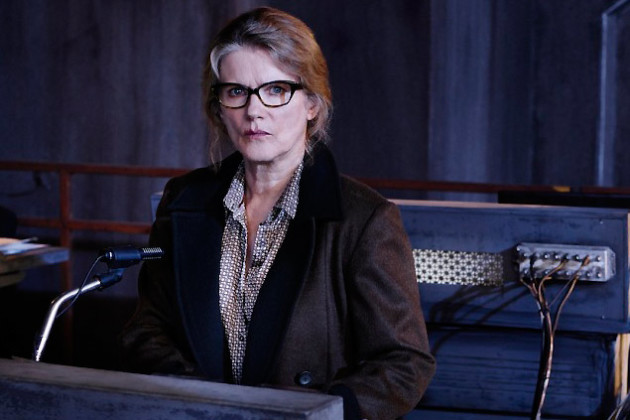

Characters might be given some brief background stories, or allusions to people they've lost, but we really have no way of knowing what effects these events had on these characters. There is one bit where Katarina talks about "fate" at the end of the first season, and we find out through a "flashback" to 2015 that her past self never believed in fate; she was more objective and focused. I think this was only a phase, though, because a scientist who believes in fate probably wouldn't go on with her time travel project, so that bit of character development seems to have been lost in the wind... but this is a good example for how character development exists in this show; it's mostly cosmetic and temporary, because the real thing being prioritised here is the plot.

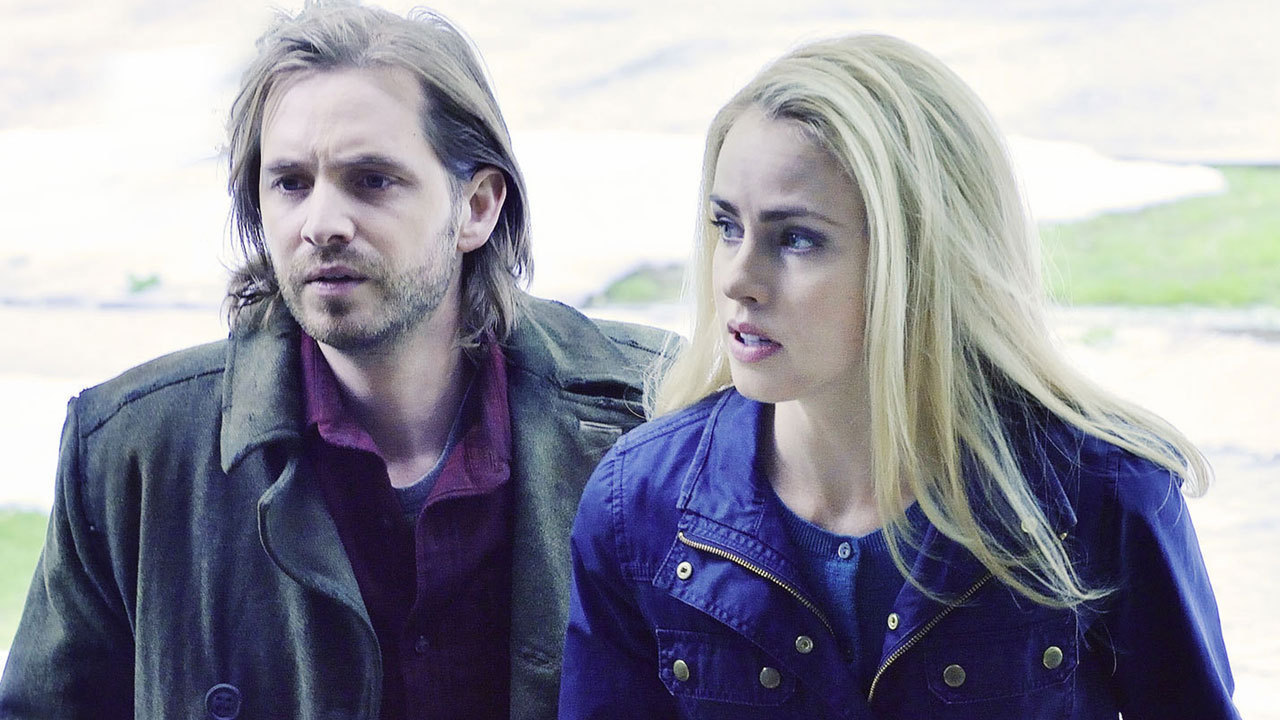
In this latest episode, the tension between Jennifer and Dr. Railly is finally released because she discovers that Jennifer is quite a sick, troubled young girl. Dr. Railly seems to finally soften her demeanor and starts to empathize with her, a return to the softness she once had in season one. This was a welcome interaction, because it showed us that Railly still cares for people, and that she has the capacity to feel regret for how she treats people.

Image result for 12 monkeys jennifer dr railly

This sort of depth in character is not explored nearly enough in 12 Monkeys, and I feel that these are the things people will come back for. That said, I fear that it will just come and go, and when it's gone nobody will miss it. Which is a shame, because they already have some interesting characters and a great premise. They just need to really dig in deep with it.

Battlestar Galactica built a world and a mythos so unique and incredible that even I know that it's unfair to expect every sci-fi show to live up to it. They can try, but they'll never quite reach those heights again.



Friday, May 27, 2016

Drake to the Future

Okay, check, check, check it out! I did this edit of one of Uncharted 4's best action sequences in the game while using the Back to the Future score as a backdrop... Let me know what you guys think, and maybe go over to the actual page and give it a like, share, and comment. Thanks!


Saturday, May 7, 2016

Review: Captain America: Civil War (No spoilers)

I found Civil War to be great in many ways. It's hard to even find fault with it at the moment, it was just so well-crafted in how it handled its characters and story, as filled to the brim as it was.

Ironically, compared to Age of Ultron, which struggled to find a reason to exist (despite being really cool), Civil War felt like it had an actual story to tell. I value when a movie, even an action movie, puts characters and story first. I believe most people don't care about anything happening in a movie if they're not emotionally invested in some way first. And Marvel realizes this.

I see Captain America films as the FBI of the MCU and the Avengers as the CIA. The FBI evaluates and dispatches threats nationally, whereas the CIA focuses on global threats... And generally speaking Cap is usually on the defensive in his films, and the role relegated to the state is that of the enemy.

What's been slowly building since the first Captain America has now matured into a unified theme, which may make it my favorite subseries of Marvel films to date. That theme culminates into ideas like, "believe in yourself," "always question authority," and "do what you believe is right." I believe all these themes tie into the unifying theme of the sovereign state, and most importantly, the human being. That the rights of the individual shall not be sacrificed for the rights of the state... which is a very powerful message.

What's funny is they used a bungle like Ultron to their advantage in telling an even better story this time around. Even with missteps, Marvel figures out a way to turn those low points into gold. This is the movie where even Tony's character arc from way back in Iron Man 3 finally pays off. I didn't feel like he earned it in that movie. But this is his true dark turning point, and only now can he truly change and grow.

As for the rest of the film and not focusing so much on drama for a second, this is actually a very entertaining, and often times funny film. I laughed out loud hysterically at certain parts, and I'm surprised at the range of emotions this film could make me feel and not feel unbalanced as a result.

All I'll say is you will have a great time watching this, especially if you refresh your memory from Winter Soldier beforehand. Every character gets a moment to shine and fall, and it still feels like a Captain America film to me, which is how it should be.

Sunday, November 29, 2015

Review: The Man in the High Castle

(Skip to the second paragraph if you're already familiar with the show!)

The Man in the High Castle is a new show available exclusively for Amazon streaming subscribers. The concept is fairly simple: What would have happened if we lost World War II? The United States is taken over jointly by the Nazis and Japan, splitting the country down the middle for each political power to control. What would result is a general sense of political unease between the two super powers as we focus on an ensemble of key players, both significant and seemingly not. This all takes place in 1962, twenty years after the Axis Powers win the war.

I had high hopes for this show because of the concept alone. I feel that there's considerably more promise to an idea like this than the advertising would lead you to believe, though you could hardly blame them for taking the easy route: "What if we lost to the Nazis?!" It's almost too obvious a starting point and makes it automatically seem unoriginal... And when I first started watching the pilot, I almost let myself believe that this show was just another generic "what if" type of scenario... until the twist at the end.

That twist would set the tone for the rest of the show in that nothing is quite as it appears to be. This pertains to the characters as well as the overarching plot of the show. The plot involves the obtaining and transit of a film reel (of which there are more than one) to its intended destination. Joe Blake, a spy from the Greater Nazi Reich (East Coast US), is ordered to deliver one of the film reels across the country to meet a rebel contact from the Japanese-controlled Pacific States (West Coast US, but the show focuses mostly on San Francisco). What is on these film reels is of great importance to both the underground rebellion as well as to Hitler himself.

The Man in the High Castle is a very tightly written show, meaning it's heavy on plot, and it sticks to that more often than not. This isn't Lost or Battlestar Galactica where they veer off into characterization for an entire episode. Furthermore, it doesn't try to titillate you by showing you a scandalous sex scene for no reason. No, this show keeps focused on immediate problems the characters face and thus keeps us, the audience, invested in everything happening. Believe me when I say this show feels appropriately tense and perilous as you would hope from any story involving Nazis and authoritarian Japanese.

There is great attention to detail in this show. Some examples require your ability to pay attention to those details, such as the soundtrack. Hearing alternate versions of famous songs like Mr. Sandman and Mack the Knife is eerie and unsettling. The clues are all there if you sit and think about it for a second. A famous song sung by a black musician in our timeline probably wouldn't have come to be in the new American Nazi Reich. You come up with your own conclusions. They drop little hints that spur your imagination to fill in the gaps. Like a Horror film, what you don't see is often scarier than what you do see.

There's also something to be said for the culture clash in a world like this, where White people are now seen as the undesirable minority in the Pacific States. It's a truly bizarre and eye-opening display to see a proper white antiques seller being treated like the help by an affluent Japanese couple. Japanese cartoons and comics are the new normal, while our classic signs of Americana are nowhere to be seen. Japanese flags and signs reign supreme in this new society, and there's a strange connection I drew while watching this: San Fransokyo from Big Hero 6. This new San Francisco is sort of like a nightmarish version of that same concept, though I'm curious why people keep mashing up these two cities.

As for the Greater Nazi Reich? Well, strangely enough, it feels mostly unchanged from our own reality, except for the fact that swastikas and other Nazi imagery stain their uniforms and buildings. These are ordinary American people who fought along with the Nazis, either through force or by their own volition, and thus were placed in positions of power to run this new regime. It's uncomfortable to see these normal people acting... normal. The main difference is they have an unconditional dedication to their country, stand tall with diehard patriotism, and do whatever it takes to take down a perceived evil threat... Er, um... The main difference is... America is the best! God bless America!

The Man in the High Castle could have failed in a number of ways, but the ways in which it succeeds are many: a finely crafted attention to detail, intriguing storytelling, relatable characters, provocative imagery, and an amazing cast. Really, you could not ask for more with a show like this. There are 10 episodes available to watch, and the cliffhanger from the finale already has me itching to watch another full season. Go and watch it.

I've also heard a few complaints that the show is "slow" or people lose interest early on. How to tell if this is a show for you? Well, I think a good rubric is whether or not you enjoy the Transformers movies. If so, you might want to stay away from this subtle and intellectually alarming masterpiece. It's not for those without imagination and patience.